Horia Bernea
HORIA BERNEA
1938–2000
In Romania, Horia Bernea is among the most renowned artists of his generation, first and foremost among artists, art historians and critics, collectors, and art enthusiasts, but also among members of a broader public. His work can be (and has been) displayed and interpreted both in relation to the innovative directions that emerged in Romanian art from the mid-1960s onward, and in the context of a turn toward tradition, its reconsideration and revitalization in later years; although these may seem appear to be opposing orientations, multiple threads connect these approaches. His profound interest for the spiritual dimension of art is coupled with a commitment to the irreducibly material character of the artwork, a feature Horia Bernea found particularly worthy of interest and admiration.
The first instances of the artist’s presence on the Western artistic scene date from the early 70s. But his work, as well as the engaging features of his public and private persona? continue to our day to elicit the interest of noted specialists, representatives of museums and of reputed galleries, curators, critics and art theorists, whose curiosity is drawn not only by local/regional aspects of East-South Central European art, but also by its larger resonance in today’s world.
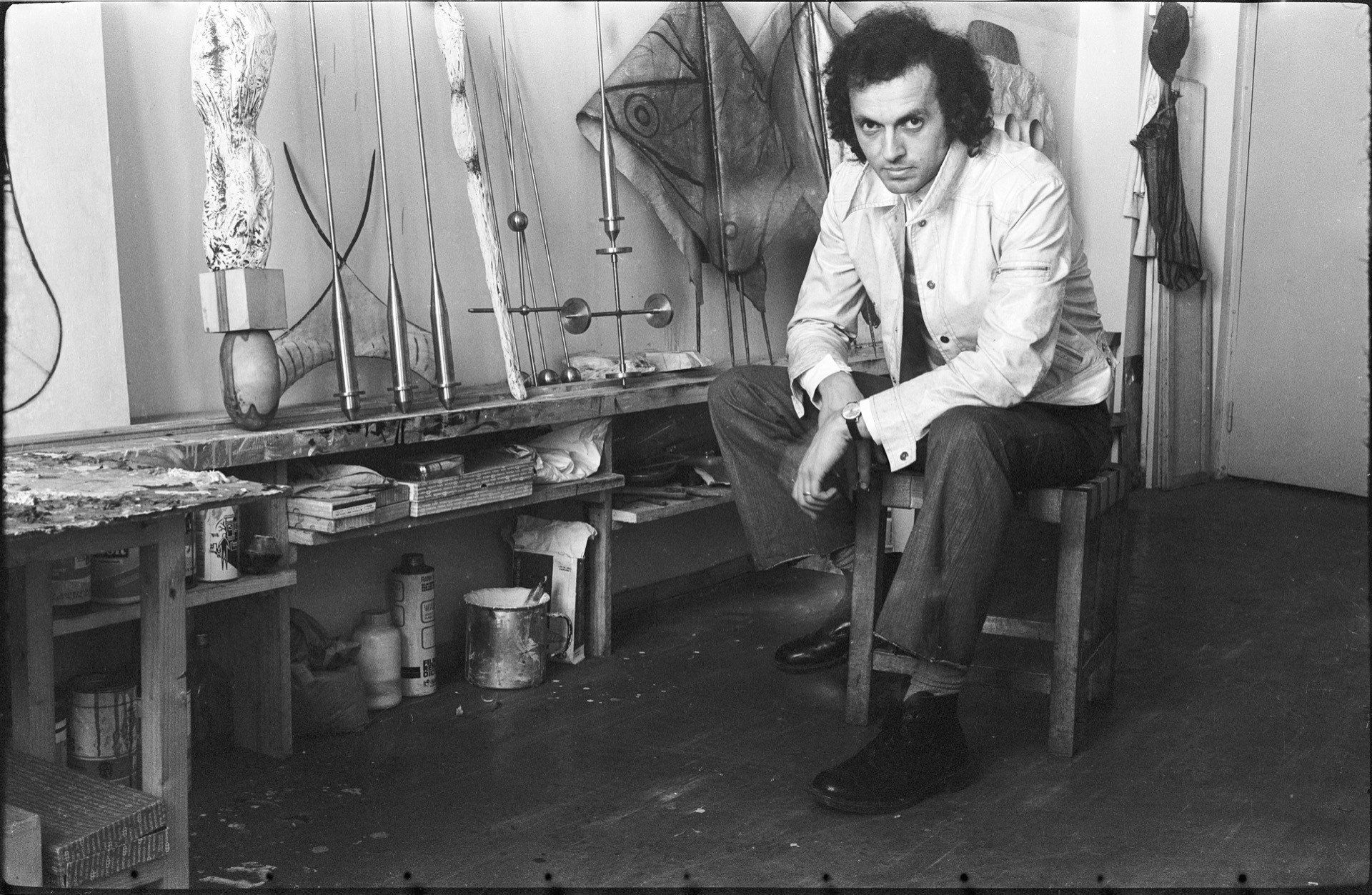
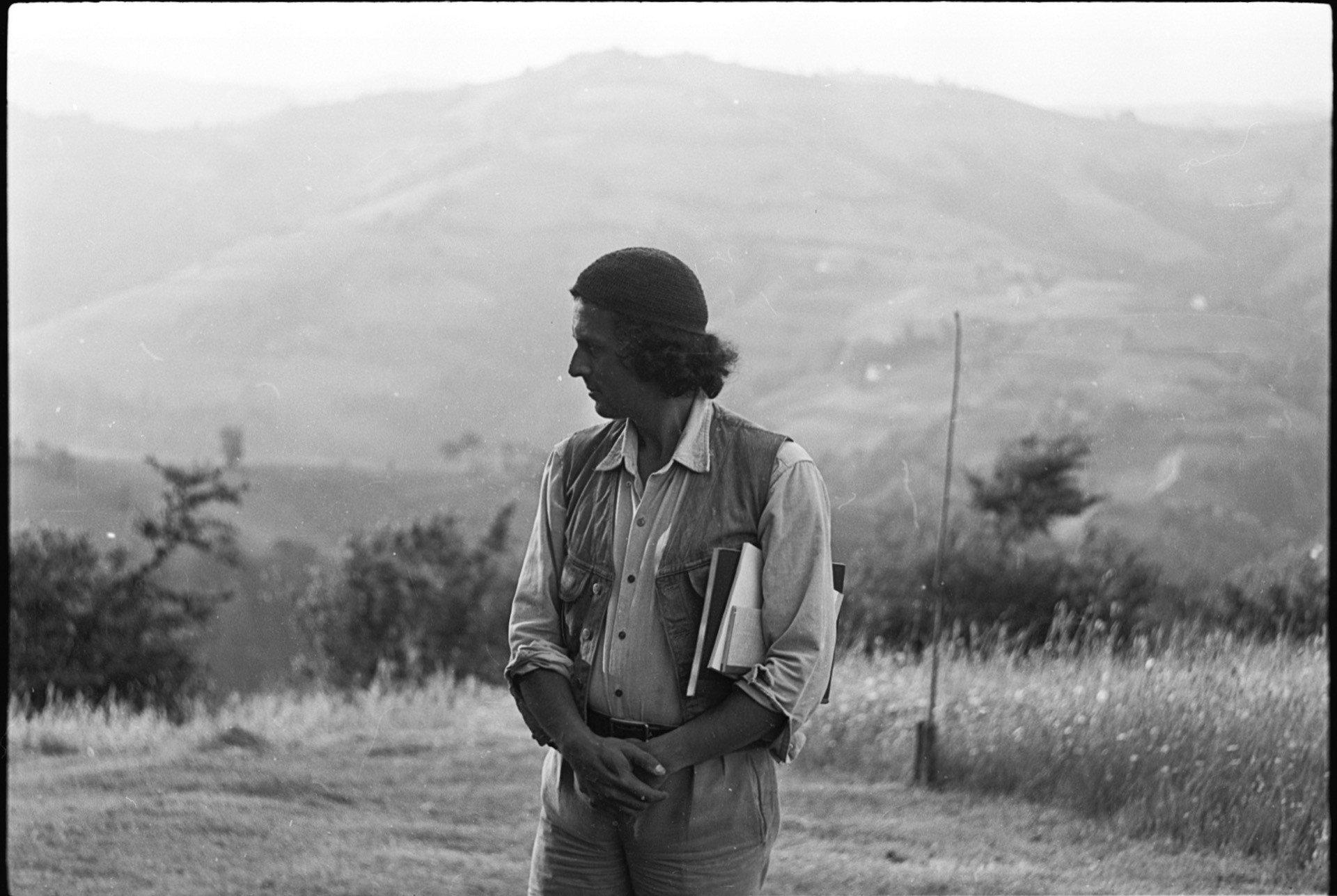
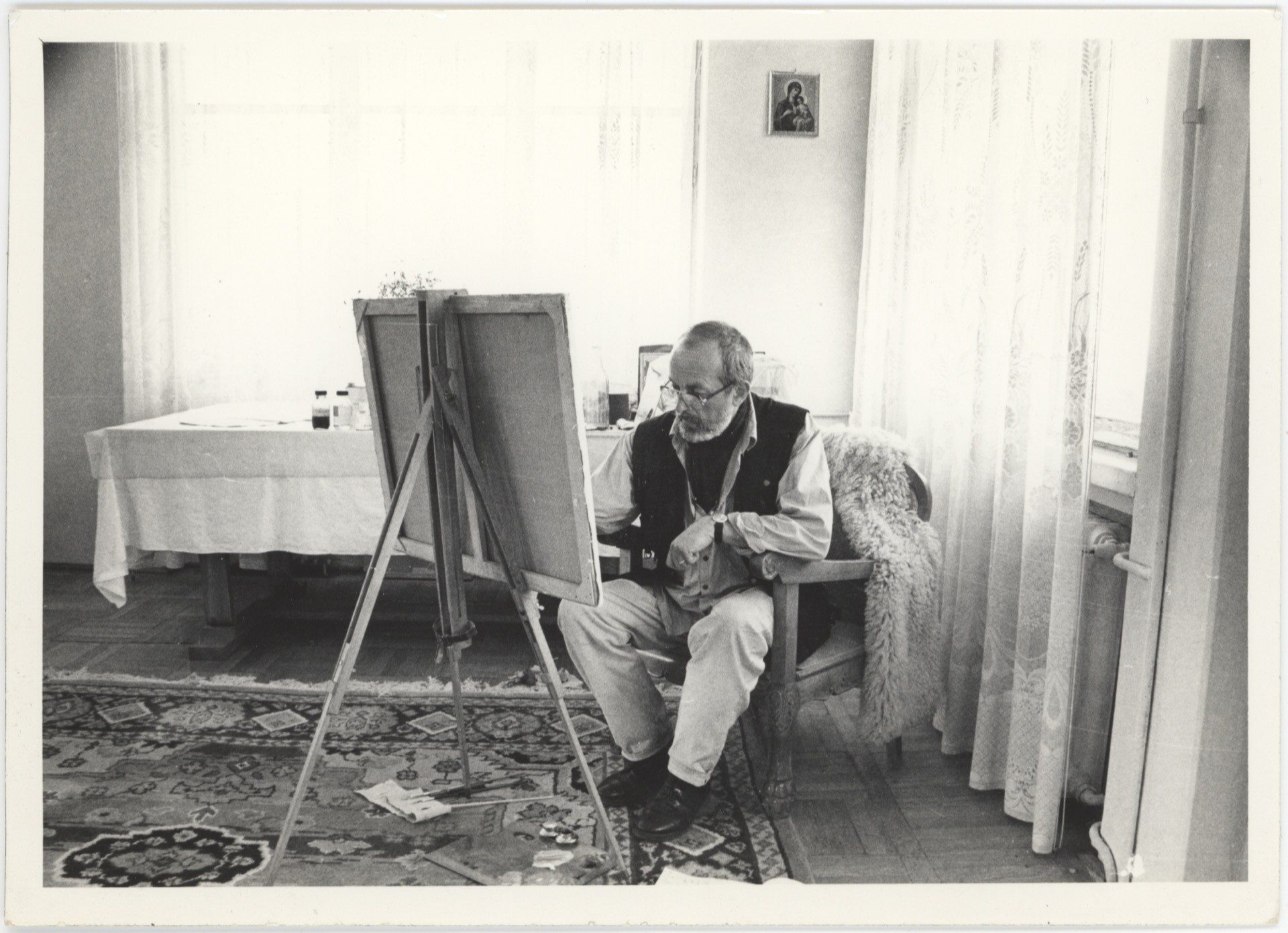
Biographical and artistic timeline
1938
On 14 September, Horia Mihai Bernea is born, the eldest son of reputed ethnologist Ernest Bernea and Maria Bernea (born Patrichi)
1941
Horia Bernea’s twin sisters Ana-Maria and Tudora-Ileana are born
1942
Drawing becomes a daily activity for Horia Bernea
1945
He is enrolled at the Elementary School No. 50 in Bucharest
1946
Having been dismissed from his official position as Director of Studies at the Foreign Ministry, Ernest Bernea moves with his family to the village Poiana Mărului, near Zărnești. Horia continues his elementary schooling in the village, where his mother is a teacher
1947
Starting this year, Ernest Bernea is arrested several times by the Securitate and imprisoned, with some interruptions, due to his connections with the Legionary Movement. The family experiences a long period of extreme privation
1955
A pupil of the Andrei Șaguna High School in Brașov, renamed the Boys’ High School No. 1 of Stalin City, Horia Bernea sits his baccalaureate examination
1956
Horia Bernea shows his work for the first time in an exhibition for amateurs held by a Free Art School
1957
Horia Bernea manages to enroll in the Department of Mathematics and Physics at Bucharest University, where he attends courses for two years. His teachers include poet Ion Barbu
During the vacation he starts drawing in the Poiana Mărului area. One of his favourite subjects is the Hill
1958
He tries unsuccessfully to enroll in the “Nicolae Grigorescu” Institute of Fine Arts in Bucharest. He repeats the attempt the following year, again without success
1959
For the next three years he attends courses at the Technical School of Architecture, while taking drawing lessons, and exhibits through the Free Art School
1962
He is admitted to the Drawing Department of the Bucharest Pedagogical Institute
That winter, his father is released from prison
1963
He marries Margareta Cucu, a fellow student at the Technical School of Architecture
He makes frequent visits to Poiana Mărului, where he paints during the vacations, with friends who include, in various periods, Teodor Rusu, Theodor Moraru, Șerban Epure, Mircea Milcovici, Vasile Ulian, and, later, Ion Dumitriu
1965
He graduates from the Pedagogical Institute
He exhibits for the first time with his friend Paul Neagu
He makes his debut at the Cenacle of Youth functioning under the aegis the Union of Artists, exhibiting at the Union’s premises at No. 133, Calea Victoriei, and at the Athenaeum of Youth on Aleea Alexandru
1968
He exhibits abroad for the first time, as one of the Six Romanian Painters show at the Galerie Lambert in Paris
His works are selected for the exhibition of contemporary Romanian art to be held in Prague
1969
In the basement of the Romanian Athenaeum, he holds a one-man exhibition titled Concentrations
In the same year, he takes part in the Group Three exhibition at the Apollo Gallery in Bucharest and the Eight Romanian Artists exhibition in Turin, The Hague, Edinburgh, Titograd, and Szczecin
1970
He takes part in the exhibition New Directions organized by Richard Demarco Gallery in Edinburgh, and in an exhibition at University College, Birmingham. He takes part in a group exhibition at the Europe Gallery in Brussels
1971
He takes part in the Romanian Art Today exhibition held by the Richard Demarco Gallery as part of the Edinburgh Festival
With Paul Neagu, he exhibits at the Sigi Krauss Gallery in Covent Garden, London, and at the Compass Gallery, Glasgow
He contributes with his work Essay on space/Iconography after Knowledge to the Biennale of Youth in Paris and is awarded the François Stahly Prize
1972
He holds the Hill I exhibition at the Simeza Gallery, for which he is awarded the Arta magazine prize at the end of the year
1973
He takes part in a Romanian group exhibition in Toulon, France
1974
The Hill II exhibition opens at the Romanian Athenaeum
He takes part in the exhibition New Problems of the Image held by Atelier 35
He travels to Paris and the south of France, where he exhibits at Vaison la Romaine
1975
The Hill III exhibition opens at the Richard Demarco Gallery in Edinburgh, and then at the Generative Art Gallery in London. At the same time, he takes part in a group exhibition of Romanian art in Ankara, Istanbul, Turku, and Budapest
1976
The Hill IV exhibition opens in the exhibition hall of the Museum of History of the Romanian Communist Party, which hosted during this time exhibitions of contemporary art
The Richard Demarco Gallery hosts two one-person exhibitions: Horia Bernea, Paul Neagu
1977
He holds a one-man exhibition based on Hill IV at the Helios Gallery, the Timișoara Museum of Art, and the Museum of the Criș Region in Oradea
1978
Hill V exhibition at the Simeza Gallery in Bucharest. The exhibition is also shown at the 39th Venice Biennale of Art
He receives the Romanian Academy Prize for painting “Ion Andreescu”
In autumn he contributes a number of works to the Study exhibition at the Bastion Gallery in Timișoara
The Union of Artists appoints him as coordinator of the Youth Cenacle, a task he performs until 1983
1979
He takes part in the Painters from the East exhibition in Łódź and then Szczecin, Poland
1980
In summer, he takes part in the 40th Venice Biennale, showing Hill IV
In Romania, he takes part in the exhibition Writing, curated by Wanda Mihuleac and Mihai Drișcu
In the same year, he has a series of exhibitions at Riverside Studios and House Gallery, London, where he shows Hill V, at the Liverpool Academy of Art, and at the Polytechnic Art Gallery, Newcastle upon Tyne
He takes part in the Contemporary Works from the Collections of National Museums show at the Centre National d’Art Contemporain, Centre Pompidou
In autumn, Horia Bernea, Constantin Flondor, Paul Gherasim, Horia Paștina, Mihai Sârbulescu and others form the Prolog group
1981
The first exhibition of the 9+1 group opens at the Simeza Gallery, a group that would operate with a variable membership until 1990. The initial group included, alongside Horia Bernea, Marin Gherasim, Florin Ciubotaru, Sorin Dumitrescu, Horea Mihai, Vasile Gorduz, Napoleon Tiron, Bata Marianov, Doru Covrig, and Andrei Pleșu
1982
He receives the Grand Prize of the Union of Artists
He takes part in the exhibition Place – Deed and Metaphor held by the Museum of the Village, curated by Anca Vasiliu
He takes part in a new exhibition of the 9+1 group.
1984
In Paris, he takes part in the Thresholds exhibition held at the Pompidou Centre
1985
At the National Museum of Art in Bucharest he opens a retrospective, whose main theme is The Banner. The exhibition travels to the Bastion Gallery in Timișoara, and in the following years to the New Gallery in Cluj, and then to Târgu Mureș (1987)
1986
He takes part in the exhibition organized by the Prolog group at the Căminul Artei Gallery, Bucharest
1987
He exhibits at the Bastion Gallery in Timișoara
1990
In February, he exhibits alongside eight Romanian artists in exile, including Dan Negoescu, Victor and Dana Roman, and George Apostu, at the French National Assembly. In Vaison la Romaine in July–August he holds a retrospective of works created in France between 1974 and 1990
Minister of Culture Andrei Pleșu appoints him General Director of the Museum of the Romanian Peasant
In spring he is elected Interim President of the Romanian Union of Artists
He takes part in the last exhibition of the 9+1 group
In December he holds a one-man exhibition at the City Galleries in Bacău
1992
In October he opens an exhibition at Mücsarnok, Budapest, curated by Călin Dan, showing works from the Banners series and from the 1970s
1993
The official opening of the Museum of the Romanian Peasant
He makes etchings for an edition of Andrei Pleșu’s Tescani Diary
He takes part in the 010101… exhibition, curated by Călin Dan, showing a video installation titled Beauty Will Redeem the World
He takes part in the exhibition Byzantium After Byzantium at the Romanian Cultural Institute in Venice, curated by Coriolan Babeți
1994
Prolog exhibition at the Romanian Cultural Institute in Venice
He takes part in the exhibition of contemporary Romanian art held by the National Office of Exhibitions and the National Museum of Art’s Contemporary Art Department, with a view to the opening of a new museum of contemporary art, with the support of collector Peter Ludwig
He is awarded the Prize of the Romanian Cultural Foundation for his exceptional contribution to the recovery of the spiritual traditions of Romanian culture
The Pillar exhibition opens at the Catacomba Gallery, curated by Sorin Dumitrescu
The Gardens exhibition, curated by Mihai Oroveanu, opens at the Ronda Hall of the ¾ Floor Galleries of the National Theatre
1995
He is awarded the Apostu Grand Prize of the George Apostu International Centre of Art and Culture in Bacău, where he opens a one-man exhibition
He makes a major donation of works from the Concentrations series to the Contemporary Art Department of the National Museum of Art in Bucharest
1996
He takes part in the Experiment exhibition, curated by Alexandra Titu, with a number of works from his early period
The Museum of the Romanian Peasant is named European Museum of the Year by an international jury
1997
A large retrospective exhibition is held at the National Museum of Art in Bucharest, organised by Ruxandra Balaci, which then travels to the Brukenthal Museum in Sibiu
In May the exhibition Gardens and Iconostases is held at the Accademia di Romania in Rome
He exhibits at the Viennese Opera, at the invitation of director Ioan Hollender
In July Horia Bernea exhibits watercolours at the French Cultural Institute in Bucharest
In August he opens a major retrospective exhibition in Constanța
Pope John Paul II awards him the Pontifical Medal
1998
In April he takes part in the exhibition Una Bisanzio Latina – arte romena degli anni Novanta, organised by Teodor Baconsky, Maria Berza, Sorin Dumitrescu and Mihai Oroveanu, with an exhibition catalogue edited by Sorin Dumitrescu
Horia Bernea: Columns exhibition held in Bistrița-Năsăud, curated by Mircea Oliv
2000
He is awarded the Grand Cross for Cultural Merit
Humanitas publishes The Creed, with watercolours by Horia Bernea
Following a heart operation, Horia Bernea dies in Paris on 4 December
2001
Publication of the volume A Few Thoughts about the Museum, Quantities, Materiality and Crossing, edited by Irina Nicolau and Carmen Huluță, accompanied by a Sentimental dossier conceived by the two editors. The same year, Georgeta Roșu publishes Romanian Cookbook, with drawings by Horia Bernea
Humanitas publishes Roma Caput Mundi, a dialogue between Horia Bernea and Teodor Baconsky, with photographs, drawings and watercolours by Horia Bernea
Preview I exhibition at the ¾ Floor Galleries of the National Theatre includes a large number of works by Horia Bernea
Exhibition of early drawings at the Sabina and Jan Negulescu Galleries and publication of The Horia Bernea Notebook, edited by Ion Grigorescu
2004
At the opening of the new National Museum of Contemporary Art, a room is reserved for the exhibition Horia Bernea and Paul Neagu. Confluences, curated by Mihai Oroveanu
At the Matthias Corvinus House in Cluj, Dr. Sorin Costina from Brad shows more than fifty works by Horia Bernea from his personal collection
The exhibition is later shown in Bistrița and this occasions the publication of a calendar and CD-ROM of works by Horia Bernea from the Costina collection
Works by Horia Bernea are included in the Prolog exhibition at the Arad Art Museum
2005
Works by Horia Bernea are included in the exhibition Portrait. Mood and Reflection, curated by Doina Mândru
A number of works by Horia Bernea are included in the Depot exhibition at the National Museum of Contemporary Art, curated by Mihai Oroveanu
2008
The Museum of the Romanian Peasant holds an exhibition titled Horia Bernea: Appropriate
Gestures. The volume Horia Bernea. Seventy Years, Seventy Pages is published to mark the occasion
2009
The Romanian Cultural Institute in Paris hosts the exhibition Horia Bernea or Painting as Redemption
Horia Bernea. La réconciliation avec l’image, Cloître Wercollier de l’Abbaye de Neumünster, Luxembourg, organized at the initiative of Vlad Alexandrescu, Romanian Ambasador in Luxembourg at the time; curated by Celia Ghyka who also edited the catalogue
2010
The exhibition Horia Bernea. Real Time held by the National Museum of Contemporary Art in Bucharest and curated by Mihai Oroveanu, brings to the fore works from the 1960s and 70s
2013
The Cluj Museum of Art holds an exhibition of works by Horia Bernea from the collection of Mircea Pinte, curated by Ion Grigorescu
2014
The Mogoșoaia Palace holds an exhibition titled The Bernea Horizon, featuring drawings and paintings from the collections of Sorin Costina, Marga Bernea, MNAC and Anastasia Foundation; curated by Doina Mândru in collaboration with Mircea Oliv
The Watercolours exhibition at the Ivan Gallery in Bucharest includes large-scale watercolours and a sketchbook from Horia Bernea’s late period (1999–2000)
Ivan Gallery shows works by Horia Bernea in the Spotlight section of the Frieze Masters Art Fair
2015
The Craiova Museum of Art holds an exhibition titled Hills and Plains. Ion Țuculescu and Horia Bernea, curated by Erwin Kessler
2016
The Romană Gallery in Bucharest, opened in 2014, showcases frequently works by Horia Bernea
The book Horia Bernea. Caiete / Notebooks 1969–1976, edited by Anca Oroveanu and Magda Radu, is published by MNAC Publishing House
2017
The group exhibition Situations and Concepts, presented at Salonul de proiecte in Bucharest, features a selection of works from the artist’s early period. The exhibition, curated by Magda Radu, will also travel later that year to the Art Encounters Biennial in Timișoara
2019
The group exhibition 24 Arguments. Early Connections in the Romanian Neo-Avant-Garde 1969–1971, National Museum of Art of Romania, curated by Alina Șerban and Ștefania Ferchedău
2025
The exhibition Horia Bernea. Essay on Space opens at Salonul de proiecte in Bucharest
This biography extends the version published by Mihai Oroveanu under the title “Horia Bernea: Biographical Timeline,” in Horia Bernea (Bucharest: Noi Media Print, 2006), 184-188.